
With the Nokia XL, which was unveiled in the country on Thursday, the company has entered the Android phablet arena.

Earlier, there was one giant in Finland, now, there are two - Nokia and Microsoft, said Alexander Stubb, Finland's minister of foreign trade.

The smartphone is priced at Rs 9,199.

The famous Nokia 8110 comes back to life in a new avatar after 22 years!

Lumia 830 is the last phone to carry the iconic Nokia branding. But is it geared to take on the competition? Himanshu Juneja has the answer.
Expecting India to emerge as the second largest market by 2008, Nokia has chalked out very aggressive business plans and said they would be difficult to beat in India.

A report has crowned Nokia, Samsung and Sony with the ultimate honour of being the top three trusted brands.
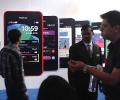
Nokia agreed in September to sell its devices and services business and license its patents to Microsoft for 5.44 billion euros after failing to recover from a late start in smartphones.
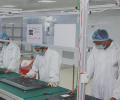
Dixon Technologies' January-March quarter (Q4) results came in well below expectations, but the potential for signing up a new mobile client, and plans for backward integration into display manufacturing kept investors happy. Dixon's Q4FY24 revenue grew 52 per cent year-on-year (Y-o-Y) to Rs 4,660 crore, below Street consensus, due to weakness in consumer electronics (Rs 890 crore) and home appliances (Rs 294 crore) segments.
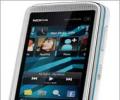
The company might launch a dual sim phone in 2010.

The Canadian smartphone maker in October last year launched BBM for rival Android- and iOS-based handsets and the app since then has been downloaded on over 40 million such handsets.

As advertising reaches a cacophonous pitch, as it does every year around this time, brands say they are finding newer and more effective ways to reach their audiences.
The figure is expected to rise to 25-30 per cent, adding around 100 million new cellular subscribers by 2009, according to a recent study by LIRNEasia and AC Nielson.

Ashish Pratap Singh wonders if Samsung will meet the same fate as Nokia?

Company has plans to launch its latest 4G enabled phone Lumia 830 priced at around Rs 26,000 before taxes by Oct.
How Motorola climbed from No. 5 to No. 2 in 12 months?
During recession, consumers tend to vouch for safer choices, and that is where Nokia can build its brand during the downturn, says D Shivakumar, MD and VP-markets, Nokia India.
While 89 per cent of executives in India said innovation was key to economic growth, in the US, only 72 per cent said innovation was important.
Check out some of the most exclusive handsets by two of the leading mobile manufacturing companies.

Ten out of the 16 sponsors will appear on team's apparel.
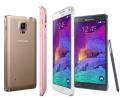
Dell emerges the most attractive among technology players.

Companies are looking for an engaging hook, and sound is universally seen as a big emotional connector, finds Nikhat Hetavkar.
Three Indian brands -- ICICI, Kingfisher and Taj -- have emerged as the most admired consumer brands across Asia-Pacific alongside global majors like LG, Sony, Cadbury, HP and Nokia in their respective segments.
In what could be the norm in the days to come, luxury brands that are available in India, including the ones mentioned above, are coming together to work in unison.

PepsiCo India's new CEO admits to being an ardent follower of the world's management gurus and they clearly mould his outlook.

The third highest paid endorser after Virat Kohli and MS Dhoni, Sindhu is the highest paid among woman athletes and non-cricket sportspersons in the country, says Urvi Malvania.
Multinational mobile companies such as Nokia, Samsung, Motorola and LG, who dominate the mobile handset space with over 75 per cent of the market share, might face a new challenge. This time it's not from Chinese unbranded products, which have been flooding the Indian market.
Relatively new brands of HUL, such as Closeup, play second fiddle to other legacy brands such as Colgate from Colgate-Palmolive and Vicco.
Microsoft is encouraging Indian developers to be innovative and come forward with their new ideas.

Lenovo, Xiaomi, Vivo, Gionee lead the onslaught, beating Indian and global brands with smart deals and astute image management measures.
Dixon Technologies right now is a beehive of activity. It is building a new facility in Noida to make 1.3 million laptops for Taiwanese PC maker Acer. The facility must be up and running in four months. The pace of activity will only increase. Last week Dixon won a similar contract from Lenovo, the Chinese personal computer maker and the third largest information technology (IT) hardware brand in India, to assemble laptops and notebooks. Though the clientele in these two cases is Taiwanese and Chinese, Dixon is a company reaching for the stars with its feet planted firmly in the Indian government's policy.

Famous and long believed to be trusted Indian brands have wilted against foreign brands, says Mohan Guruswamy.

Brand associations have helped Priyanka Chopra-starrer gain traction in traditional and digital media.

All eyes this year, however, are on Nokia's latest launches.

Chinese smartphone company Xiaomi led the Indian smartphone market during the April-June 2022 period despite a 22 per cent decline in its sales volume, a Cyber Media Research (CMR) report said on Thursday. Xiaomi stayed on top position with 20 per cent market share, followed by Samsung with 18 per cent share. The Korean phone maker, however, led the growth in 5G phone category with 28 per cent market share in that segment, according to the report.
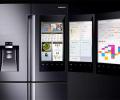
What is driving the digital-first approach of traditional, legacy brands? Apart from the growing adoption of the internet in the country, brands are drawn to the agility of the medium.
Lumia 630 is no exception although this time the shape is more flat and blocky than usual.
History of electronics indicates that no company, nor any nation for that matter, has been able to cement pole position and maintain it through several cycles. he death of its iconic promoter, Lee Kun-hee, raises questions over how long the chaebol can maintain its gigantic footprint in the global electronics industry, says Devangshu Datta.

Their favourite alternatives: Malaysia, Vietnam and the Philippines. Note, India is missing from that list. And this is despite an attractive financial incentive scheme for OSAT players. The reason, said a senior executive of a US chip company who had a meeting in Taiwan just a few weeks ago, is that "they want more predictability in government policy because they plan to put in big money."
 © 2026 Rediff.com - Advertise with us - Disclaimer - Privacy Policy - Sitemap - Feedback - About us - Terms of use - Grievances